Industrial Silver Plating (QQ-S-365) for maximum electrical conductivity and anti-galling. High-purity finishing for busbars and connectors.
Silver Plating
Silver is the “heavy hitter” of the conductive metals, outperforming even copper and gold in specific technical areas:
Highest Conductivity: Silver has the lowest electrical resistance and highest thermal conductivity of any metal. It is the gold standard for high-frequency (RF) signals due to the “skin effect,” where signals travel primarily on the surface of the conductor.
Anti-Galling (High Temperature): In the aerospace industry, silver is used as a high-temperature lubricant. It prevents fasteners and engine components from “seizing” or “galling” at temperatures up to 1200°F (approx. 650°C), where oils and greases would simply burn away.
Antibacterial Properties: Silver ions are naturally antimicrobial, making silver-plated surfaces useful in specific medical and food-processing environments.
Low Contact Resistance: Even when slightly tarnished, silver maintains very low contact resistance compared to other base metals, as silver sulfide is still somewhat conductive.
- Aerospace
- Defense
- Electronics
- Adhesion
- Aesthetics
- Conductivity
- High Reflectivity
- Solderability
- Aluminum Alloy
- Aluminum Casting
- Aluminum Forging
- Copper
- Plastic
- Stainless Steel
- Steel
- Steel Casting
- Zinc Die Cast

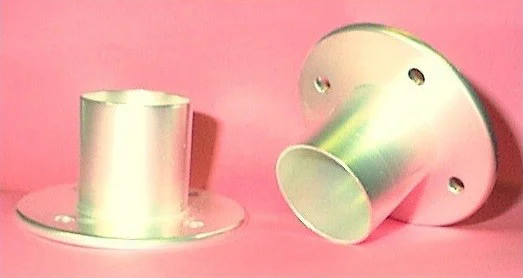
Key Advantages: Conductivity and Anti-Galling
The primary reason engineers specify black oxide is its zero dimensional change. Because it is a conversion coating rather than an additive one, the thickness is negligible (typically 5 to 10 millionths of an inch). This makes it ideal for:
- High-precision machined components.
- Internal threads and small fasteners.
- Complex assemblies where tolerances are too tight for paint or powder coating.
The Role of Supplemental Coatings
Because silver tarnishes rapidly when exposed to humidity and sulfur, it often requires a post-plating treatment to maintain its appearance and solderability:
-
Anti-Tarnish Dips (Silver Sentry/Evabrite): These are organic or inorganic chemical films that create a microscopic barrier against sulfur.
-
Gold Overplate: In critical electronics, a “gold flash” is sometimes applied over silver to provide the conductivity of silver with the tarnish-immunity of gold.
-
Wax or Lacquer: Used primarily in decorative or static architectural applications to preserve the brilliant white luster.
Specifications
|
Specification
|
Comments
|
|---|---|
|
ASTM B700
|
As specified typically .000050 – .0015
|
|
Type 1
|
99.9% Minimum Silver Purity.
|
|
Type 2
|
99.0% Minimum Silver Purity.
|
|
Type 3
|
98.0% Minimum Silver Purity.
|
|
Grade A
|
Matte (No brighteners used in the plating bath).
|
|
Grade B
|
Bright (Developed by use of brighteners in the plating bath).
|
|
Grade D
|
Semi-bright (Developed by use of additives in the plating bath).
|
|
Class N
|
No supplementary tarnish resistant (Chromate) treatment
|
|
Class S
|
With Supplementary tarnish resistant (Chromate) treatment
|
Industry Applications
Silver is the preferred choice for high-power electronics and aerospace propulsion:
-
Power Distribution: Used on bus bars, switchgear, and high-voltage fuse links where heat dissipation and conductivity are paramount.
-
Telecommunications: High-frequency connectors and waveguides for satellite and radar systems rely on silver to minimize signal loss (attenuation).
-
Jet Engines: Silver-plated nuts, bolts, and turbine components are used to ensure parts can be disassembled after exposure to extreme engine heat.
-
Bearings: High-performance lead-silver bearings are used in heavy-duty engines to provide a low-friction surface under immense pressure.
Finish Comparison
|
|
Silver Plating
|
Gold Plating
|
Tin Plating
|
|---|---|---|---|
|
Primary Goal
|
Max Conductivity / Lubricity
|
Reliability / Tarnish-Free
|
Low-Cost Solderability
|
|
Electrical Resistance
|
Lowest
|
Low
|
Moderate
|
|
Tarnish Resistance
|
Poor (Turns black)
|
Excellent
|
Good
|
|
Cost
|
Moderate
|
High
|
Low
|
|
High Temp Use
|
Excellent (Up to 1200°F)
|
Good
|
Poor (Melts at 450°F)
|
|
Silver Plating
|
|
|---|---|
|
Primary Goal
|
Max Conductivity / Lubricity
|
|
Electrical Resistance
|
Lowest
|
|
Tarnish Resistance
|
Poor (Turns black)
|
|
Cost
|
Moderate
|
|
High Temp Use
|
Excellent (Up to 1200°F)
|
|
Gold Plating
|
|
|---|---|
|
Primary Goal
|
Reliability / Tarnish-Free
|
|
Electrical Resistance
|
Low
|
|
Tarnish Resistance
|
Excellent
|
|
Cost
|
High
|
|
High Temp Use
|
Good
|
|
Tin Plating
|
|
|---|---|
|
Primary Goal
|
Low-Cost Solderability
|
|
Electrical Resistance
|
Moderate
|
|
Tarnish Resistance
|
Good
|
|
Cost
|
Low
|
|
High Temp Use
|
Poor (Melts at 450°F)
|
Why Choose One Over the Other?
Silver Plating:
The “Performance” Choice
Silver offers the highest electrical and thermal conductivity of any metal. It is the “high-performance” choice for systems carrying heavy current where minimizing heat and energy loss is critical. While it can develop a surface tarnish (silver sulfide), this layer is often thin enough that the mechanical wiping action of a connector will break through it to maintain a solid connection.
Best for: High-power busbars, RF (Radio Frequency) cavities, and electric vehicle charging connectors.
Gold Plating:
The “Reliability” Choice
As you noted with high-end electronics, gold is the gold standard for long-term reliability. Because it is a noble metal, it is completely immune to oxidation and corrosion. In low-voltage applications, even a tiny amount of surface tarnish can create enough resistance to break a signal; gold ensures that the connection remains “clean” for the entire life of the device.
Best for: Semiconductor interconnects, aerospace sensors, and low-voltage signal contacts.
Tin Plating:
The “Value” Choice
Tin is the most cost-effective solution for providing good conductivity and corrosion protection. Its greatest strength is its “solderability”—it makes joining components incredibly easy. However, tin is susceptible to “whisker” growth (tiny metal filaments that can cause short circuits) and “fretting corrosion,” where small vibrations cause the soft metal to wear away and oxidize.
Best for: Consumer electronics, terminal blocks, and components that require high-volume soldering.
A Note on "Silver Whiskers"
While silver is a fantastic conductor, engineers must be aware of Silver Migration. In high-humidity environments with a DC voltage, silver ions can “migrate” across an insulating surface to form microscopic, hair-like filaments (whiskers). These can eventually cause short circuits. For this reason, silver-plated components in electronics are often sealed or spaced specifically to prevent “bridging.”