Precision Electroless Nickel Plating (MIL-C-26074) for uniform thickness and high hardness. Ideal for complex B2B geometries and corrosion resistance.
Electroless Nickel Plating (ENP)
Electroless Nickel Plating (ENP)
- Low Phos (1–3% P): Highest hardness and best for alkaline environments.
- Mid Phos (6–9% P): The most common “workhorse” for general industrial use.
- High Phos (10–13% P): Best for maximum corrosion resistance and acidic environments; it is also non-magnetic.
- Automotive
- Food Processing
- Oil & Gas
- Adhesion
- Aesthetics
- Conductivity
- Corrosion Resistance
- Lubricity
- Solderability
- Wear Resistance
- Aluminum Alloy
- Aluminum Casting
- Aluminum Forging
- Copper
- Plastic
- Stainless Steel
- Steel
- Steel Casting
- Zinc Die Cast

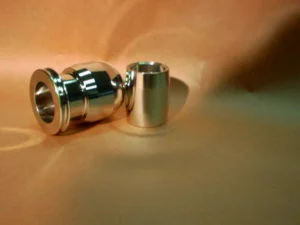
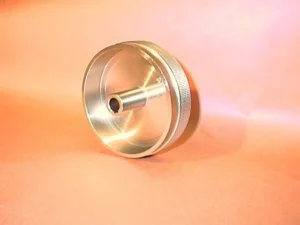
Key Advantages: Uniformity and Hardness
Electroless Nickel is favored when precision and durability are more important than pure aesthetics:
Perfect Uniformity: It provides a consistent thickness regardless of the part’s shape. This eliminates the “edge buildup” common in electroplating, making it ideal for complex valves and threaded parts.
Extreme Hardness: As plated, ENP is quite hard, but it can be heat-treated to reach hardness levels similar to hard chrome (up to 68–70 HRC).
Wear and Abrasion Resistance: The phosphorus in the alloy provides a low coefficient of friction, which protects moving parts from “scuffing” or wear.
Corrosion Protection: High-Phos ENP acts as an exceptional barrier coating, often outperforming stainless steel in harsh chemical environments.
The Role of Supplemental Coatings
Because Electroless Nickel is a high-performance finish on its own, it rarely requires a supplemental coating for protection. However, it is sometimes treated with:
PTFE (Teflon) Infusion: Nickel-PTFE co-deposition creates an incredibly “slippery” surface for parts that cannot be lubricated with oil.
Baking/Heat Treatment: Not a coating, but a critical post-process step used to increase the hardness and adhesion of the nickel layer.
Chrome Overplate: Occasionally used for extreme decorative brilliance or additional “slip” in hydraulic applications.
Specifications
Specification |
Comments |
|---|---|
MIL-C-13924C
| |
Class 1
|
.As coated.
|
Class 2
|
Steel and other base metals heat treatable to improve hardness. (Not performed at DFW Anodize)
|
Class 3
|
Aluminum and other base metals not heat treatable.
|
Class 4
|
Aluminum alloy, heat treatable, processed to improve adhesion of the nickel deposit.
|
Grade A
|
0.0010″ min.
|
Grade B
|
0.0005″ min.
|
Grade C
|
0.0015″ min.
|
Industry Applications
Electroless Nickel is a staple in Oil & Gas, Food Processing, and Automotive manufacturing:
Ball Valves and Pumps: Used internally to protect against corrosive “sour” gas and abrasive slurries in oil fields.
Mold & Die Tooling: Provides a hard, release-ready surface for plastic injection molds.
Food Machinery: Used because it is non-toxic, resistant to cleaning chemicals, and provides a smooth, easy-to-sanitize surface.
Salvage/Repair: Because it can be applied in very specific thicknesses, it is used to “build up” worn-out parts back to their original dimensions.
Finish Comparison
Electroless Nickel |
Hard Chrome |
Zinc Plating | |
|---|---|---|---|
Thickness Control
|
Perfectly Uniform
|
Uneven (Builds on edges)
|
Moderate
|
Hardness
|
High (Up to 70 HRC)
|
Highest (72+ HRC)
|
Low
|
Corrosion Defense
|
Excellent (High Phos)
|
Moderate (Porous)
|
Good (Sacrificial)
|
Complexity
|
Best for internal bores
|
Best for simple shapes
|
Best for high volume
|
Main Industry
|
Oil & Gas / Food Tech
|
Heavy Machinery
|
Automotive
|
Electroless Nickel | |
|---|---|
Thickness Control
|
Perfectly Uniform
|
Hardness
|
High (Up to 70 HRC)
|
Corrosion Defense
|
Excellent (High Phos)
|
Complexity
|
Best for internal bores
|
Main Industry
|
Oil & Gas / Food Tech
|
Hard Chrome | |
|---|---|
Thickness Control
|
Uneven (Builds on edges)
|
Hardness
|
Highest (72+ HRC)
|
Corrosion Defense
|
Moderate (Porous)
|
Complexity
|
Best for simple shapes
|
Main Industry
|
Heavy Machinery
|
Zinc Plating | |
|---|---|
Thickness Control
|
Moderate
|
Hardness
|
Low
|
Corrosion Defense
|
Good (Sacrificial)
|
Complexity
|
Best for high volume
|
Main Industry
|
Automotive
|
Why Choose One Over the Other?
Electroless Nickel:
The “Geometry” Choice
As you noted with precision parts, Electroless Nickel (EN) is the go-to for complex shapes. Unlike standard electroplating, it doesn’t use an electric current; instead, it uses a chemical bath to deposit metal. This ensures the coating is perfectly uniform, even inside deep bores, sharp corners, and internal threads. It offers a great balance of extreme corrosion resistance and high hardness (which can be increased further with heat treatment).
- Best for: Complex valves, oil and gas downhole equipment, and aerospace components with tight dimensional tolerances.
Hard Chrome:
The “Armor” Choice
Hard Chrome is the “heavy-duty” choice for industrial wear. It is exceptionally hard (reaching 800–1100 HV) and has an incredibly low coefficient of friction—it is “slicker” than almost any other plating. However, because it is an electrolytic process, the coating tends to “build up” on outer corners and stay thin in recessed areas. It is often applied over-sized and then ground back to the final precision dimension.
- Best for: Hydraulic cylinders, engine crankshafts, and plastic injection molds that face constant abrasion.
Zinc Plating:
The “Economy” Choice
Zinc is the ultimate “sacrificial” choice for high-volume steel parts. It is the most cost-effective way to prevent rust on items that don’t face heavy wear. Like the “Outdoor” choice mentioned previously, if a zinc-plated bolt is scratched, the zinc will chemically “sacrifice” itself to protect the steel underneath. It is often finished with a chromate conversion coating (clear, yellow, or black) to boost its lifespan in humid environments.
Best for: Construction hardware, automotive brackets, and mass-produced nuts and bolts.
A Note on "High-Phos" Magnetics
One unique feature of High Phosphorus Electroless Nickel is that it is non-magnetic. This is critical for electronic housings and sensitive scientific instruments where magnetic interference (EMI) must be kept to a minimum, even if the underlying part is made of steel.