Certified Stainless Steel Passivation (ASTM A967 & AMS 2700). Eliminate surface iron and maximize corrosion resistance for medical and aerospace parts.
Passivation
- Aerospace
- Food Processing
- Medical
- Semiconductor
- Conductivity
- Corrosion Resistance
- Stainless Steel

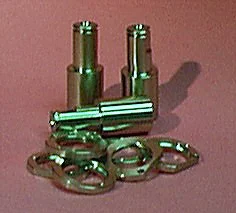
Key Advantages: Chemical Purity and Zero Build-up
Passivation is the “invisible” finish that ensures the longevity of stainless components:
-
True Zero Dimensional Change: Because it is a cleaning process rather than a coating, it adds zero thickness to the part. It is the safest finish for ultra-high-precision aerospace threads and medical implants.
-
Corrosion “Restoration”: It restores the corrosion resistance that may have been lost during the heat of welding or machining.
-
Chemical Cleanliness: It removes grease, oils, and metallic residue, leaving a surface that is “chemically clean,” which is vital for oxygen systems and high-vacuum environments.
-
Aesthetic Preservation: It prevents the unsightly “tea-staining” or localized spotting that occurs when lower-grade stainless is exposed to humidity.
The Role of Supplemental Coatings
Because passivation is meant to maximize the metal’s natural properties, it is rarely followed by another coating. However:
-
Testing (The “After-Finish”): Instead of a coating, passivated parts undergo a Copper Sulfate Test or a High-Humidity Test to prove that all free iron has been removed.
-
Dry Film Lube: Occasionally applied after passivation in aerospace bolt applications to prevent galling while maintaining the corrosion-resistant base.
Specifications
|
Specification
|
Comments
|
|---|---|
|
QQ-P-35 C
|
|
|
AMS-QQ-P-35
|
Types II, VI, VII
|
|
ASTM A967
|
Nitric 1, Nitric 2, Nitric 3
|
|
Type II
|
Medium temperature with sodium dichromate.
|
|
Type VI
|
Low temperature.
|
|
Type VII
|
Medium temperature.
|
|
Type VIII
|
Medium temperature with higher nitric acid concentration.
|
Industry Applications
Passivation is a mandatory step in the medical, aerospace, and semiconductor industries:
-
Medical Implants: Surgical screws, plates, and instruments must be passivated to ensure they are biocompatible and won’t corrode inside the human body.
-
Semiconductor Manufacturing: Gas delivery systems and vacuum chambers must be “ultra-pure”; passivation ensures no metallic contaminants outgas into the vacuum.
-
Food & Dairy: Stainless steel vats and piping are passivated to prevent any iron from leaching into the food product.
-
Aerospace Fasteners: High-strength stainless bolts are passivated to ensure they maintain their integrity in saltwater environments.
Finish Comparison
|
|
Passivation
|
Electropolishing
|
Black Oxide (Stainless)
|
|---|---|---|---|
|
Primary Goal
|
Iron Removal / Purity
|
Smoothness / High Shine
|
Aesthetics / Non-reflectivity
|
|
Process Type
|
Chemical Soak
|
Electrochemical (Current)
|
Chemical Conversion
|
|
Dimensional Change
|
None
|
Minimal (Removes metal)
|
Negligible
|
|
Visual Result
|
No change (Clean matte)
|
Mirror-like / Bright
|
Deep Black
|
|
Main Material
|
Stainless Steel
|
Stainless / Copper / Aluminum
|
Steel / Stainless Steel
|
|
Passivation
|
|
|---|---|
|
Primary Goal
|
Iron Removal / Purity
|
|
Process Type
|
Chemical Soak
|
|
Dimensional Change
|
None
|
|
Visual Result
|
No change (Clean matte)
|
|
Main Material
|
Stainless Steel
|
|
Electropolishing
|
|
|---|---|
|
Primary Goal
|
Smoothness / High Shine
|
|
Process Type
|
Electrochemical (Current)
|
|
Dimensional Change
|
Minimal (Removes metal)
|
|
Visual Result
|
Mirror-like / Bright
|
|
Main Material
|
Stainless / Copper / Aluminum
|
|
Black Oxide (Stainless)
|
|
|---|---|
|
Primary Goal
|
Aesthetics / Non-reflectivity
|
|
Process Type
|
Chemical Conversion
|
|
Dimensional Change
|
Negligible
|
|
Visual Result
|
Deep Black
|
|
Main Material
|
Steel / Stainless Steel
|
Why Choose One Over the Other?
Passivation:
The “Invisible” Choice
As you noted with high-precision components, Passivation is the standard for stainless steel. It is a chemical “cleaning” process—not a plating—that uses nitric or citric acid to remove free iron from the surface. This allows the natural, protective chromium oxide layer to reform. Because it adds zero thickness, it is the “Precision” choice for parts with microscopic tolerances. It doesn’t change the look of the part, but it ensures it won’t rust.
Best for: Medical instruments, aerospace fasteners, and food-processing equipment where dimensional change is unacceptable.
Electropolishing:
The “Micro-Smooth” Choice
Electropolishing is often described as “reverse plating.” It uses an electrochemical bath to strategically remove the “peaks” of a metal surface, leaving it perfectly flat and mirror-like. Not only does it provide a high-luster finish, but it also deburrs and passivates the part simultaneously. Because the surface is smoothed at a microscopic level, it is much harder for bacteria or contaminants to “stick” to the metal.
Best for: Pharmaceutical piping, surgical implants, and decorative marine hardware where a “mirror” finish and high hygiene are required.
Black Oxide:
The “Utility” Choice
Black Oxide is a conversion coating primarily used on carbon steel. Unlike the other two, it creates a deep black, non-reflective finish. It is the “Precision” choice for steel because it adds negligible thickness (less than 1 micron), allowing gears and shafts to fit together perfectly. However, it offers very low corrosion resistance on its own and must be paired with an oil or wax sealant to prevent rusting.
Best for: Firearms, internal engine components, transmission gears, and industrial hand tools where glare reduction and tight fits are essential.
A Note on Citric vs. Nitric Acid
Historically, Nitric Acid was the only standard for passivation, but it is hazardous and environmentally taxing. Citric Acid Passivation (derived from citrus fruits) is becoming the modern industry standard. It is safer for workers, faster, and often more effective at targeted iron removal without attacking the underlying chromium or nickel in the alloy.