Certified Cadmium Plating (Type I, II & III) for aerospace & defense. High-performance sacrificial corrosion protection per QQ-P-416.
Cadmium Plating
- Aerospace
- Maritime
- Adhesion
- Conductivity
- Corrosion Resistance
- Lubricity
- Solderability
- Copper
- Stainless Steel
- Steel
- Steel Casting
Key Advantages: Lubricity and Galvanic Compatibility
While many coatings offer corrosion protection, cadmium is specified for its unique physical properties:
-
Natural Lubricity: It has a very low coefficient of friction. This prevents “galling” (friction-welding) on threaded fasteners, ensuring they can be tightened and loosened repeatedly without seizing.
-
Galvanic Compatibility: It is the preferred finish when steel parts must be joined to aluminum components. It minimizes the “battery effect” (galvanic corrosion) that usually occurs when these two metals touch.
-
Electrical Conductivity: Unlike many paints or thick oxides, cadmium remains highly conductive, making it ideal for electrical connectors and EMI shielding.
The Role of Supplemental Coatings
In its raw plated state, cadmium is a silvery-white metal. To maximize its lifespan and add color, it is almost always treated with a Chromate Conversion Coating:
-
Type I (Clear/Bright): Provides a silvery appearance with moderate corrosion protection.
-
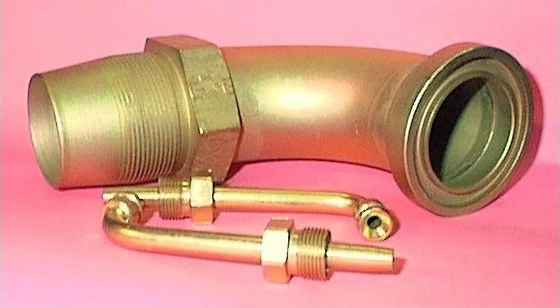
Type II (Gold/Yellow): The industry standard for aerospace; provides significantly higher salt-spray resistance.
-
Olive Drab/Black: Used for military applications requiring camouflage or maximum corrosion defense.
Industry Applications
-
Landing Gear: Where high-strength steel must be protected from salt spray and de-icing fluids.
-
Flight Controls: Used on critical pins, bolts, and rod ends that require precise torque-tension relationships.
-
Marine Hardware: Components exposed to constant salt-water environments.
Finish Comparison
|
|
Cadmium Plating
|
Zinc Plating
|
Nickel Plating
|
|---|---|---|---|
|
Primary Goal
|
High-End Marine Protection
|
Low-Cost Rust Prevention
|
Wear Resistance / Hardness
|
|
Corrosion Defense
|
Extreme (Sacrificial)
|
Good (Sacrificial)
|
Moderate (Barrier only)
|
|
Lubricity
|
Excellent (No seizing)
|
Poor (Tends to bind)
|
Moderate
|
|
Toxicity
|
High (Highly regulated)
|
Low / Environmentally Friendly
|
Low
|
|
Main Industry
|
Aerospace & Military
|
Automotive & Hardware
|
Decorative & Food Tech
|
|
Cadmium Plating
|
|
|---|---|
|
Primary Goal
|
High-End Marine Protection
|
|
Corrosion Defense
|
Extreme (Sacrificial)
|
|
Lubricity
|
Excellent (No seizing)
|
|
Toxicity
|
High (Highly regulated)
|
|
Main Industry
|
Aerospace & Military
|
|
Zinc Plating
|
|
|---|---|
|
Primary Goal
|
Low-Cost Rust Prevention
|
|
Corrosion Defense
|
Good (Sacrificial)
|
|
Lubricity
|
Poor (Tends to bind)
|
|
Toxicity
|
Low / Environmentally Friendly
|
|
Main Industry
|
Automotive & Hardware
|
|
Nickel Plating
|
|
|---|---|
|
Primary Goal
|
Wear Resistance / Hardness
|
|
Corrosion Defense
|
Moderate (Barrier only)
|
|
Lubricity
|
Moderate
|
|
Toxicity
|
Low
|
|
Main Industry
|
Decorative & Food Tech
|
Why Choose One Over the Other?
Cadmium:
The “Fail-Safe” for Extreme Environments
Cadmium is the most powerful corrosion inhibitor of the three, but it is also the most toxic. Because of environmental regulations (RoHS/REACH), you should only choose Cadmium when it is technically non-negotiable.
Choose Cadmium if: You are designing for aerospace, marine, or military applications where parts must not seize (high lubricity) and must survive constant salt-water exposure.
The “Secret Weapon”: It is the best choice for galvanic compatibility. If your steel part is touching an aluminum wing or hull, Cadmium prevents the two metals from reacting and corroding each other.
Zinc:
The “Economical” Workhorse
Zinc is the industry standard for general rust prevention. It is inexpensive, environmentally friendly, and highly effective for standard atmospheric conditions.
Choose Zinc if: You have high-volume hardware (bolts, brackets, or consumer goods) that will stay indoors or in mild outdoor environments.
The Trade-off: Zinc provides “sacrificial” protection like Cadmium, but it lacks the natural slipperiness. If you have fine-threaded fasteners that need to be torqued precisely, Zinc can sometimes “bind” or gall unless a specialized wax or lubricant is added.
Nickel:
The “Durable” Shield
Unlike Zinc and Cadmium, Nickel is a barrier coating. It doesn’t sacrifice itself to save the steel; instead, it acts as a hard, non-porous “armor” that prevents moisture from reaching the base metal.
Choose Nickel if: You need wear resistance and aesthetics. Nickel is much harder than Zinc or Cadmium, making it ideal for moving parts, hand tools, or decorative finishes.
The Risk: Because it is a barrier, if a Nickel coating is deeply scratched, the steel underneath will rust rapidly at the point of the scratch. Zinc and Cadmium would continue to protect that scratch; Nickel will not.
A Note on Hydrogen Embrittlement
Cadmium-plated parts (specifically those with a Rockwell hardness above HRC 31) are highly susceptible to Hydrogen Embrittlement. To prevent the parts from snapping under load, they must undergo a Baking Cycle (typically 375°F for 8–24 hours) immediately after plating to drive out trapped hydrogen.
All parts with a hardness greater then HRC 40 shall be stress relieved prior to cleaning and plating, and will be given a hydrogen embrittlement relieve post bake.