Industrial Black Oxide coating for steel, stainless, and copper. MIL-DTL-13924 compliant finish with zero dimensional change and reduced glare.
Black Oxide
- Aerospace
- Automotive
- Adhesion
- Aesthetics
- Conductivity
- IR Reduction
- Low Reflectivity
- Lubricity
- Copper
- Stainless Steel
- Steel
- Steel Casting

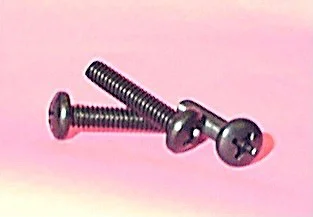
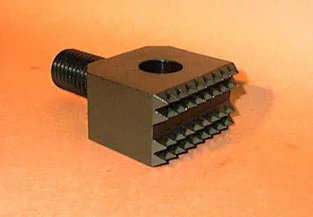
Key Advantages: Dimensional Stability
- High-precision machined components.
- Internal threads and small fasteners.
- Complex assemblies where tolerances are too tight for paint or powder coating.
The Role of Supplemental Coatings
- Oil: The most common sealant; the oil is absorbed into the porous oxide layer to create a moisture barrier.
- Wax: Often used when a dry-to-the-touch finish is required.
- Lacquer: Used for a more permanent, glossy aesthetic.
Specifications
|
Specification
|
Comments
|
|---|---|
|
MIL-C-13924C
|
No dimensional change.
|
|
Class 1
|
Alkaline, oxidizing. for wrought iron, cast and malleable irons, plain carbon, and low alloy steels
|
|
Class 3
|
Fused salt oxidizing. (Not performed at DFW Anodize)
|
|
Class 4
|
Alkaline oxidizing. For 300 series Corrosion resistant steel alloys only.
|
Industry Applications
Black oxide is widely utilized in the aerospace and automotive industries, particularly for transmission components and hydraulic systems. In these environments, the parts are constantly bathed in lubricating oils, which naturally provides the necessary corrosion protection that the coating lacks on its own. It is the preferred choice for moving parts that require a non-reflective, anti-galling surface but cannot tolerate the thickness of more robust finishes like chrome or zinc plating.
Finish Comparison
|
|
Black Oxide
|
Zinc Plating (Clear/Black)
|
Anodizing (Type II/III)
|
|---|---|---|---|
|
Base Material
|
Ferrous (Steel, Iron)
|
Ferrous (Steel, Iron)
|
Non-Ferrous (Aluminum)
|
|
Process Type
|
Chemical Conversion
|
Electroplating (Additive)
|
Electrochemical (Growth)
|
|
Dimensional Change
|
Negligible (< 1 µm)
|
Significant (5–25 µm)
|
Moderate (10–50 µm)
|
|
Corrosion Resistance
|
Poor (Relies on oil)
|
Excellent (Sacrificial)
|
Excellent (Ceramic-like)
|
|
Surface Hardness
|
No Change
|
Moderate
|
Very High (especially Type III)
|
|
Common Use
|
Gears, Bearings, Tools
|
Bolts, Brackets, Chassis
|
Aerospace frames, Cases
|
|
Black Oxide
|
|
|---|---|
|
Base Material
|
Ferrous (Steel, Iron)
|
|
Process Type
|
Chemical Conversion
|
|
Dimensional Change
|
Negligible (< 1 µm)
|
|
Corrosion Resistance
|
Poor (Relies on oil)
|
|
Surface Hardness
|
No Change
|
|
Common Use
|
Gears, Bearings, Tools
|
|
Zinc Plating (Clear/Black)
|
|
|---|---|
|
Base Material
|
Ferrous (Steel, Iron)
|
|
Process Type
|
Electroplating (Additive)
|
|
Dimensional Change
|
Significant (5–25 µm)
|
|
Corrosion Resistance
|
Excellent (Sacrificial)
|
|
Surface Hardness
|
Moderate
|
|
Common Use
|
Bolts, Brackets, Chassis
|
|
Anodizing (Type II/III)
|
|
|---|---|
|
Base Material
|
Non-Ferrous (Aluminum)
|
|
Process Type
|
Electrochemical (Growth)
|
|
Dimensional Change
|
Moderate (10–50 µm)
|
|
Corrosion Resistance
|
Excellent (Ceramic-like)
|
|
Surface Hardness
|
Very High (especially Type III)
|
|
Common Use
|
Aerospace frames, Cases
|
Why Choose One Over the Other?
Black Oxide: The “Precision” Choice
As you noted, this is the go-to for transmission and hydraulic systems. In these cases, the clearance between a gear and a shaft might be so tight that adding even 10 microns of zinc plating would cause the assembly to seize.
-
Best for: Moving parts, precision gauges, and internal engine components.
Zinc Plating: The “Outdoor” Choice
Zinc acts as a “sacrificial” barrier. If the coating is scratched, the zinc will corrode instead of the steel underneath. However, because it adds a measurable layer of metal, you often have to “over-tap” threads (make them slightly larger) to account for the thickness of the plating.
-
Best for: Automotive chassis parts, outdoor fasteners, and brackets.
Anodizing: The “Protection” Choice
If your part is aluminum, you would typically use anodizing rather than black oxide. Anodizing actually “grows” an oxide layer out of the base metal. It is incredibly hard and can be dyed various colors (including a deep, lustrous black).
-
Best for: Lightweight aerospace structures, high-wear surfaces, and decorative consumer electronics.